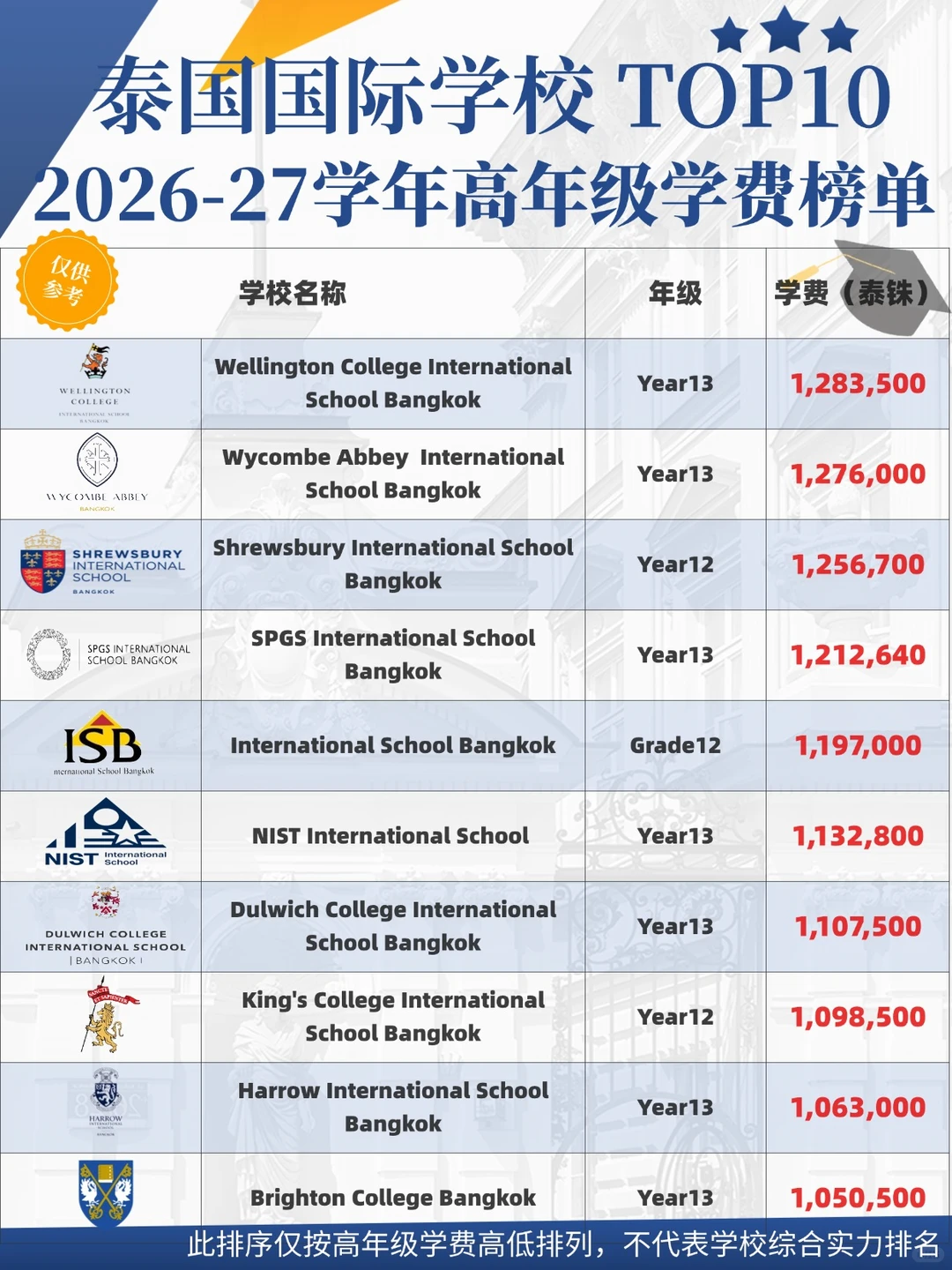
Tuition is inevitably one of the biggest considerations for parents choosing schools. Especially for Years 12–13 (Senior High), tuition fees are generally much higher than those for younger year groups. Today we’ve compiled the top 10 most expensive international schools in Thailand for senior grades in the 2026–2027 academic year, as a reference for parents doing their research.
Why do high school fees jump so sharply? Many schools charge annual fees in the millions of Thai Baht. This comes down to the nature of this stage of study. Courses in Years 12–13 are highly specialised.
Whether it is A-Level, IB or other curricula, the requirements for teachers and campus facilities rise significantly. Schools need to employ subject-specialist teachers, maintain dedicated laboratories and classrooms, and run a university counselling team to help students plan applications, polish personal statements and prepare for interviews. What you pay for is not merely “tuition for classes”, but also university application support services. This explains why the senior school fees at the same institution can be substantially higher than those for middle school.
Tuition ≠ total education budget
I have seen many parents make decisions based only on the tuition figure, only to find that total expenses far exceed their expectations by the end of the first year. You should also factor in hidden costs: extracurricular activities, sports programmes, competitions, study tours, plus university application-related charges. These add up to a considerable sum.
High price ≠ the right fit
There are many factors to weigh when selecting a school: curriculum, educational philosophy, campus culture, teacher retention, family budget… and one easily overlooked point — your child’s personality and traits. Even a school charging million-baht tuition can be a tough experience if its philosophy does not align with your child’s learning pace. On the flip side, a school without top-tier pricing can deliver great value if it matches your child’s developmental needs.
Two practical tips for parents:
1.Beyond tuition, set aside a separate budget for your child’s skill-building extracurricular activities. Hobbies and strengths also require investment.
2.If you have schools on your shortlist, arrange an in-person campus visit and bring your child to experience the atmosphere. A visit will help you tell whether it is truly a good fit.